How Much Does Tree Removal Cost in Orlando? Factors & Estimates Explained
Orlando’s trees do more than shade our yards. They shape our neighborhoods and protect our homes. But when a tree becomes a threat—leaning dangerously, damaged by a storm, or dying—a simple question comes up fast: How much will it cost to remove this tree?
At Orlando Tree Trimmer, we know the sticker shock can be real. Costs can swing wildly, and homeowners deserve clear, honest guidance. Let’s break down what matters most for tree removal pricing in Orlando, so you can plan ahead with confidence.
What Affects Tree Removal Cost in Orlando? 🌳
Not all trees—and not all removals—are created equal. Here’s what shapes the final bill:
- Tree Height & Size: A towering oak takes more time and safety planning to remove than a small ornamental tree.
- Species: Hardwoods like live oak or pecan are denser and tougher to cut than palm or pine, which can mean higher labor costs.
- Proximity to Structures: If a tree leans over your house, fence, or power lines, extra precautions and specialized equipment (sometimes even cranes) may be needed.
- Storm Damage: Trees weakened or splintered by hurricanes or high winds can be unpredictable, making removal riskier—and pricier.
- Accessibility: Tight backyards, sloped lots, or landscaping obstacles may require creative solutions, which can add to the bill.
- Local Regulations: City of Orlando and Orange County require permits for certain removals, especially for larger or protected species. Permitting can add both time and cost.
Each job is a puzzle. The more complex the situation, the more pieces—and costs—are involved.
Typical Price Ranges by Tree Size
While exact figures vary, you’ll often see these price ranges in Orlando:
- Small Trees (up to 30 ft): Budget-friendly, usually at the lower end of the spectrum.
- Medium Trees (30–60 ft): Moderate costs, reflecting increased risk and labor.
- Large Trees (over 60 ft): Significant investment, especially for mature oaks or pines near homes or power lines.
Remember, stump grinding, hauling debris, and site cleanup are typically extra. Always ask what’s included in your quote.
Emergency vs. Scheduled Removal Costs 🚨
Emergencies don’t wait for business hours. After hurricanes or summer storms, downed or hazardous trees need immediate attention. That urgency can increase costs due to:
- After-hours labor
- Extra crew mobilization
- Priority scheduling
- Specialized safety measures
Scheduled removals—when the tree isn’t an immediate threat—tend to be less expensive. Planning ahead saves money and stress.
When Is Crane-Assisted Removal Needed?
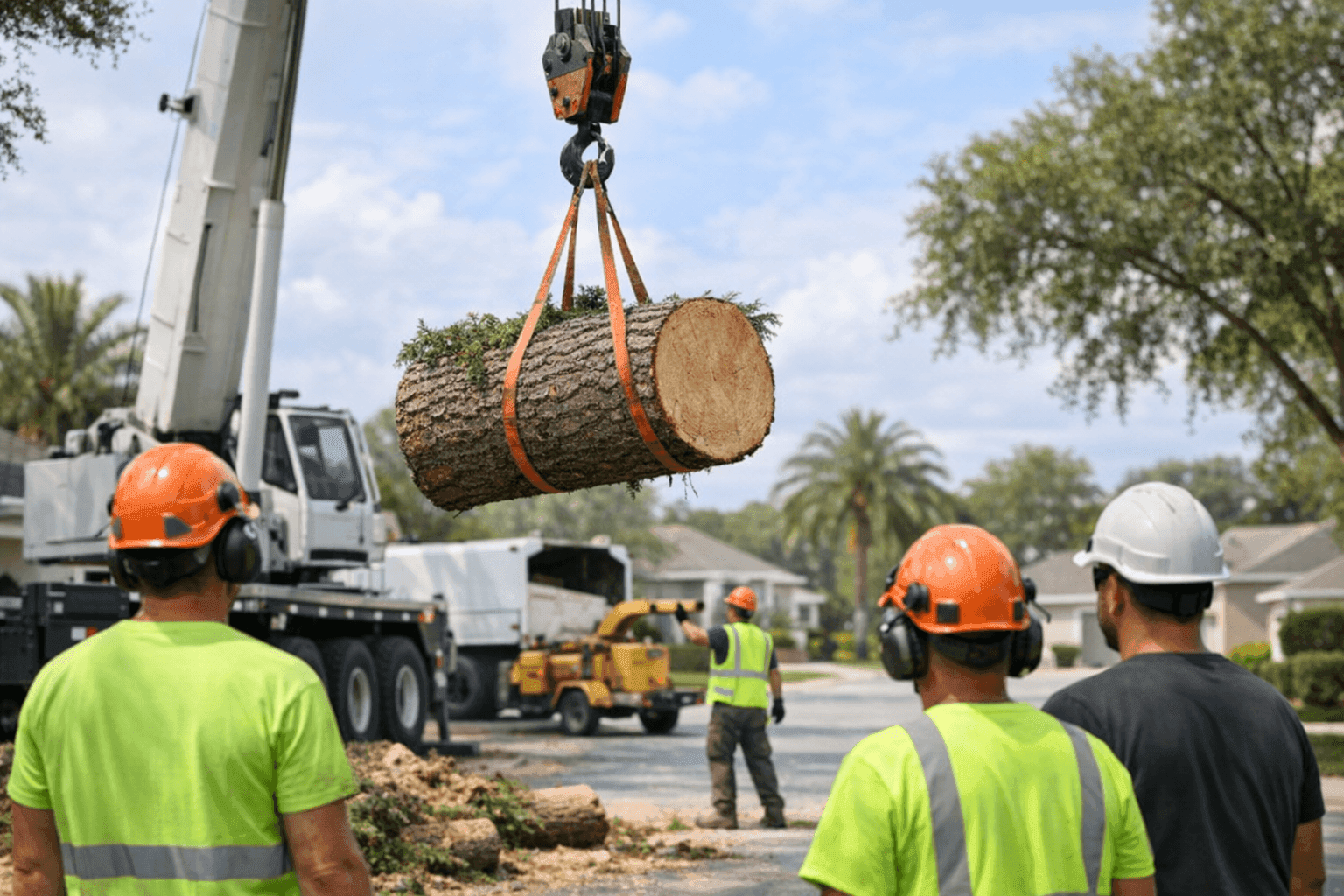
Sometimes, a tree is so large, so close to a building, or so unstable that traditional methods aren’t safe. In these cases, a crane is brought in to gently lift sections of the tree away. This specialized service:
- Protects homes, fences, and landscaping from damage
- Reduces risk to workers
- Speeds up complex removals
Crane-assisted tree removal comes with its own cost structure due to equipment, operators, and setup. It’s a game-changer for tricky jobs—ask your provider if it’s the right fit for your situation. Learn more about crane-assisted tree removal.
Additional Costs to Factor In
Tree removal isn’t just about the trunk coming down. Consider these potential add-ons:
- Stump Grinding: Removing the stump for a smooth lawn or replanting.
- Debris Hauling: Disposing of branches, logs, and chips.
- Permitting: Required by local ordinance for certain tree types or sizes.
- Property Repairs: Fixing landscaping or hardscaping affected during the process.
- Plant Health Consultation: An arborist’s assessment for other at-risk trees.
Each of these can add to your total. Ask for an itemized quote to avoid surprises.
How to Get an Accurate Estimate 📝
No two trees—and no two yards—are identical. To get a fair, accurate estimate:
- Schedule an On-Site Assessment: A professional needs to see the tree, the site, and any obstacles.
- Ask About Licensing & Insurance: Florida law requires proper insurance for tree_services. Protect yourself from liability by verifying coverage.
- Request an Itemized Quote: Make sure stump grinding, cleanup, and permitting are clearly listed.
- Check Local Regulations: The City of Orlando and Orange County both have tree protection codes. A reputable provider will handle permitting, but you can find guidelines at the City of Orlando’s Code Enforcement Division.
- Review Credentials: Look for ISA-certified arborists and crews trained in the latest safety protocols.
This process helps you compare apples to apples and avoid lowball estimates that cut corners on safety or clean-up.
Emergency Tree Services in Orlando, FL: What to Know
Storm season in Central Florida brings risks. If a tree falls on your home, blocks your driveway, or threatens power lines, it’s time for Emergency Tree Services in Orlando, FL. Here’s what to expect:
- Rapid response—often within hours
- Assessment of structural risks
- Coordination with utilities if power lines are involved
- Priority removal of hazards, with full cleanup to follow
For more information, see our emergency tree services.
Frequently Asked Questions
Q: Do I need a permit to remove a tree in Orlando?
A: Many removals, especially for larger or protected species, require a permit. Your tree_services provider should handle this as part of the process.
Q: Will my homeowner’s insurance cover tree removal?
A: It depends. If the tree caused damage in a storm, you may be covered for removal and repairs. If it’s a routine removal, insurance usually does not apply.
Q: How long does the process take?
A: Small trees can be removed in a few hours. Large, complex jobs—or those requiring a crane—may take a full day or more, especially if permitting or utility coordination is needed.
Q: Can I keep the wood or mulch?
A: Absolutely! Many homeowners choose to keep logs or wood chips for landscaping or firewood. Let your crew know in advance.
Local and Seasonal Considerations 🌦
Orlando’s weather plays a starring role in tree health—and removal costs. Hurricane season, late summer storms, and even drought can all impact tree stability. The best time for scheduled removals? When weather is stable and soil is dry, usually late fall through early spring.
City and county regulations change periodically. Always verify the latest guidelines to avoid delays or fines.
Related Services
If you’re considering tree removal, you may also benefit from our other services:
Each service is designed with Orlando homeowners in mind.
Ready to take the next step? Orlando Tree Trimmer is here to answer your questions and schedule an estimate—no pressure, just honest advice.
Call Orlando Tree Trimmer now — or reach us anytime at (407) 871-3235 .